Ortonville Safe Routes to School Plan Nearing Completion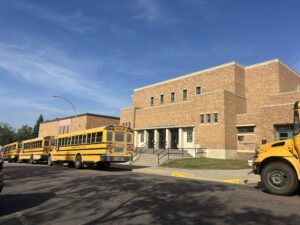
The Ortonville Safe Routes to School (SRTS) Plan is entering its final stages and is expected to be completed by the end of June. Over the past year, the planning process has brought together students, parents, school staff, city officials, and community members to identify barriers to walking and biking and develop recommendations to improve safety and accessibility for all students.
The plan includes a variety of infrastructure improvements designed to make it safer and easier for students to walk, bike, and roll to school. Recommendations include sidewalk improvements, safer street crossings, enhanced pedestrian visibility, ADA accessibility upgrades, and other projects that support active transportation throughout the community.
Following completion of the plan, the UMVRDC will work with the Ortonville School District and local partners to develop a presentation for the Ortonville City Council outlining the plan’s recommendations and potential funding opportunities. The goal is to ensure local decision-makers are prepared to pursue grant funding as opportunities become available and can begin moving priority projects toward implementation.
Many of the projects identified in the plan may be eligible for state and federal transportation funding programs, including Safe Routes to School Infrastructure Grants, Active Transportation grants, and Transportation Alternatives funding. Depending on the funding source, these programs can cover between 80% and 100% of eligible project costs, significantly reducing the financial burden on local taxpayers while helping communities make meaningful safety improvements.
By completing the Safe Routes to School Plan now, Ortonville will be well-positioned to compete for future funding opportunities and move priority projects from planning to implementation. These improvements will help create safer routes for students while also benefiting residents of all ages who walk, bike, roll, or use mobility devices throughout the community.
Do you need to update your Safe Routes to School Plan? Contact the UMVRDC. State grant funds can cover the full cost of the plans and require a local steering committee to guide the planning process. Updating your plan allows schools and communities to pursue funding opportunities for improvements that help students walk and bike safely to school. The UMVRDC can assist with the application process and guide communities through plan development from start to finish.
Now Is the Time to Prepare for Upcoming Infrastructure Funding Opportunities
Several major state and federal transportation funding opportunities are expected to open later this year, creating opportunities for communities to invest in sidewalks, ADA accessibility improvements, trails, bicycle and pedestrian infrastructure, Safe Routes to School projects, and electric vehicle charging infrastructure.
While deadlines may still be months away, successful applications are rarely developed in the final weeks before submission. Communities that begin planning early are often better positioned to submit stronger applications and secure funding.
Transportation grants frequently require project scoping, cost estimates, local match commitments, maintenance agreements, resolutions of support, and coordination among multiple partners. Beginning discussions now can help communities avoid delays and ensure projects are ready when solicitations open.
Communities considering future funding should begin identifying priority projects, evaluating local match capacity, discussing long-term ownership and maintenance responsibilities, engaging partners, and determining whether projects align with adopted plans.
Several upcoming opportunities may be a good fit for local communities:
- Transportation Alternatives Program (TA): Supports sidewalks, shared-use trails, pedestrian crossings, bicycle facilities, and ADA improvements. Typically funds 80% of project costs with a 20% local match. Letters of Intent are generally due in October, with applications due in winter.
- MnDOT Active Transportation Program (AT): Supports walking, biking, rolling, trail connections, and pedestrian safety projects. Infrastructure grants generally provide up to 100% funding, and planning assistance is available for communities preparing future projects.
- Carbon Reduction Program (CRP): Supports projects that reduce transportation emissions, including active transportation improvements and EV charging infrastructure. Typically provides 80% funding with a 20% local match.
- Safe Routes to School (SRTS): Supports sidewalks, crossings, ADA improvements, trail connections, and other school-area safety projects. Infrastructure funding may provide up to 100% of eligible costs, and planning assistance is also available.
UMVRDC is available to work with communities to identify funding opportunities, develop project concepts, coordinate stakeholders, and prepare competitive grant applications.
Communities do not need to have fully developed projects before reaching out. Early planning often leads to stronger applications and better positions communities to take advantage of future funding opportunities.
Reduce Your Energy Bill with PACE Financing
Do you know a business that is looking for ways to reduce their energy bill? The UMVRDC Property Assessed Clean Energy Revolving Loan Fund (PACE RLF) offers a way to finance improvements with no upfront costs. Repayment is made through a property tax assessment, making it an accessible option for businesses, farms, nonprofits, and multifamily housing.
To participate, an energy audit is required to show a net reduction in energy use. This audit identifies opportunities for immediate savings, which can help offset the cost of the assessment—often creating positive cash flow from day one. Eligible businesses must be located in Big Stone, Chippewa, Lac qui Parle, Swift, or Yellow Medicine County.
Eligible project types include:
- Heating and cooling systems
- Lighting upgrades
- Refrigeration
- Building envelope improvements
- Solar or wind energy systems
- Water conservation measures
- Compressed air systems
- Geothermal
- EV chargers
The program is open to:
- Commercial properties
- Farming operations
- Industrial facilities
- Multifamily housing (5+ units)
- Nonprofits
Both equipment and installation are eligible, and some new construction projects may qualify. Loans start at $5,000 and may fund up to 30% of the property’s assessed or appraised value. All installation must be completed by a licensed contractor.
Learn MoreFunding Available for Business Start-Ups and Expansions

Exciting news for entrepreneurs and business owners across western Minnesota: four new business loans have recently been funded through the UMVRDC Revolving Loan Fund (RLF), helping support innovation, business growth, and job creation throughout the region.
Even better, more than $1 million in loan funding remains available for eligible business projects.
The RLF is designed to support local business development by providing gap financing for new and expanding businesses. As loans are repaid, the funds are reinvested back into the region, creating an ongoing cycle of economic opportunity and growth.
Whether you’re launching a start-up, purchasing equipment, expanding operations, or creating new jobs, the RLF may be able to help bridge the gap between your vision and the financing needed to achieve it.
Businesses located in or planning to locate within Big Stone, Chippewa, Lac qui Parle, Swift, or Yellow Medicine counties are encouraged to explore this opportunity.
Learn MoreEnhance Your Community with a Small Cities Development Program Streetscape Project
Streetscape grants can be written for up to $600,000 to transform your downtown to be beautiful, functional, and inviting for everyone. Streetscape projects, funded through the Small Cities Development Program (SCDP), improve safety, health, and aesthetics in downtown and community gathering areas.
Eligible improvements include decorative streetlights, ADA-compliant sidewalks, trees and landscaping, benches, monuments, signage, and decorative garbage cans.
Current timeline:
- August 2026 – Proposal packets available
- November 2026 – Preliminary proposal due
- January 2027 – Preliminary determinations made if application can move forward
- April 2027 – Full proposal due
- Spring/Summer 2027 – Grant awards
- Fall 2027 – Contracts/environmental complete
- Spring 2028 – Project funds available
Energy Efficiency and Conservation Block Grant
The UMVRDC has a limited amount of grant funds remaining for our region’s local units of government, including cities, counties, schools, city/county-owned healthcare facilities and HRAs, through an Energy Efficiency and Conservation Block Grant (EECBG) from the MN Department of Commerce. With these funds, communities can conduct energy planning and project development for projects which will result in energy reduction and improved energy efficiency. Funds can be used toward feasibility studies, project planning, energy usage analysis, and energy audits on any publicly-owned building or facility. Grants are available with no match required.
We’ve had many local units of government (Appleton, Beardsley, Clara City, Dawson, Graceville, Kerkhoven, Montevideo, Ortonville/Ortonville Area Health Services, Chippewa County, Lac qui Parle County, and Ortonville School) utilize this funding to conduct energy audits of their facilities. Some have already realized cost savings through utility rebates. We still have a limited amount of funding available, so reach out today if you are interested! The UMVRDC is available to assist with the coordination of these audits and studies to make it a simple process for you. If you are interested or have questions, please feel free to contact Kevin at kevin@umvrdc.org.
UMVRDC Assisting Communities with New Greater Minnesota Electric Vehicle Charging Opportunity
The UMVRDC is helping communities across the region explore opportunities to expand electric vehicle (EV) charging infrastructure through the Minnesota Department of Transportation’s (MnDOT) Greater Minnesota EV Infrastructure Program.
With funding support from the McKnight Foundation, the UMVRDC is currently providing grant writing and application assistance at no cost to local governments. Recently, the UMVRDC partnered with the City of Appleton, City of Graceville, City of Madison, and Big Stone County to prepare applications for the program and position these communities for future EV infrastructure investment.
Public EV charging infrastructure offers more than transportation benefits—it can support economic development, tourism, and community competitiveness. Unlike traditional fueling, EV charging often encourages drivers to spend time in the community while charging, creating opportunities to visit local businesses, restaurants, parks, and community destinations. Communities with charging infrastructure may also become more attractive to residents, visitors, and employers as EV adoption continues to grow.
MnDOT’s Greater Minnesota EV Infrastructure Program uses a two-phase approach:
Phase 1: Planning and Readiness
Phase 1 is fully funded by MnDOT and helps communities evaluate whether EV charging is feasible and identify the best path forward. Selected communities receive technical assistance that includes site selection, utility coordination, charger recommendations, infrastructure planning, ownership models, permitting support, and implementation cost estimates. The outcome is a site-specific implementation plan that outlines recommended locations, infrastructure needs, and future project costs.
Phase 2: Construction and Installation
Expected to open in summer 2027, Phase 2 will provide implementation funding for communities that completed Phase 1. MnDOT anticipates covering up to 80 percent of eligible construction costs, with additional state and federal funding opportunities potentially available to reduce local match requirements.
Communities typically evaluate two charging options:
- Level 2 Chargers – Best suited for parks, community centers, libraries, downtowns, campgrounds, and destinations where visitors stay longer.
- DC Fast Chargers – Designed for quicker charging along travel corridors and regional routes, helping attract travelers and support local economic activity.
As transportation technology continues to evolve, communities that begin planning today will be better positioned to access future funding and support residents, businesses, and visitors for years to come.
Infrastructure Planning and Funding Webinars
According to our Annual Survey, water and sewer infrastructure planning and funding is consistently a top concern for communities in our region. Aging municipal systems often need repairs or replacement, and these projects can be costly—but careful planning and knowing available funding resources can help ease the financial burden for you and your residents. In response to this issue, the UMVRDC held a series of four webinars covering capital improvement planning and project budgeting, internal funding options and external funding sources (state/federal agencies) to help you plan for and fund infrastructure projects.
- Webinar #1 – Project planning and budgeting (Ehlers)
- Webinar #2 – Local sources of funding, TIF, bonding, assessments, etc. (Ehlers)
- Webinar #3 – Economic development funding (Ehlers)/DEED programs – Transportation Economic Development Infrastructure (TEDI), Greater MN Public Business Development Public Infrastructure (BDPI), & Innovative BDPI (Jeremy LaCroix, DEED)
- Webinar #4 – Water/sewer/storm sewer funding (MN Public Facilities Authority)
Many thanks to Ehlers Public Finance Advisors, MN DEED, and Minnesota Public Facilities Authority for partnering with us and sharing great information about various tools, resources and programs!
Webinar Slides & RecordingsHousing Resources
The UMVRDC offers these housing resources to help our communities:
Housing Needs Assessment
Are you ready to make decisions about how to invest in housing? Consider completing a housing needs assessment. The Housing Needs Assessment relies heavily on a community survey and interviews with key stakeholders in your community for high quality data.
Housing Case Studies
The UMVRDC has created several housing case studies with a goal of sharing stories of housing development across our region to inspire, inform, and give hope to communities who may be stuck or wondering where to start.
Developable Housing Lots/Contractor Listing
In the summer of 2024, the UMVRDC contacted all of our communities in an effort to gather any available information on available housing lots (lot size, incentives, amenities, available utilities, etc.) to create an inventory of available housing lots across the region for prospective or existing residents looking to build new housing. In 2025, we added a listing of contractors and services in the region (or just outside) that can be utilized by new and existing residents as they look to build or remodel their homes.
MN Housing Partnership’s County Profiles
Updated every two years, MHP’s profiles examine housing conditions in all 87 Minnesota counties, providing local data on housing costs, renter and homeowner cost burden, homeownership disparities, the wages needed to afford housing, and the shortage of homes affordable and available to renters with extremely low incomes.
Welcome New Board Members
Shawn Zollner joins us, representing Dawson Boyd School Board. Shawn lives in Dawson with his wife Michaela, and two young kids. They moved to Dawson in the spring of 2019. Shawn works for Helena and also joined the Dawson Fire Department in November of 2019. When not working, you can find Shawn out on the golf course or on the playground or standing behind the grill.
James Bulman joins us, representing Chippewa County Municipalities. James lives in Montevideo where he is an advisor for Edward Jones and is also the mayor. James is a native of Montevideo and a Marine Corps Veteran. He sits on several local boards including the EDA, HRA, and is currently the chair of the CCM Health Board.
UMVRDC Staff Recognition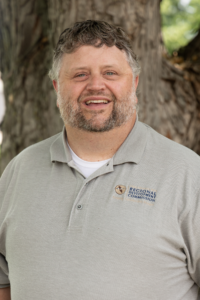
Matt Moe, our Finance Director, recently celebrated his 10th year with the UMVRDC. Matt maintains the agency budget and handles a range of fiscal-related items. When not in the office, Matt enjoys spending time with his family, hanging out at the lake, and working on 4-H projects. He is also involved in the archery club in Benson.
We’re thankful to have Matt as a member of our team!
Dates to Note
July 28: UMVRDC Annual Meeting and Tour
Montevideo || Details to come
September 22: UMVRDC Monthly Meeting
Appleton Civic Center || 6:30 p.m.